Layering For Ice Climbing!

By Uncategorized

Unsure about what to wear for a day of ice climbing? Has it been a friction point for getting into the sport? Let us help you out!

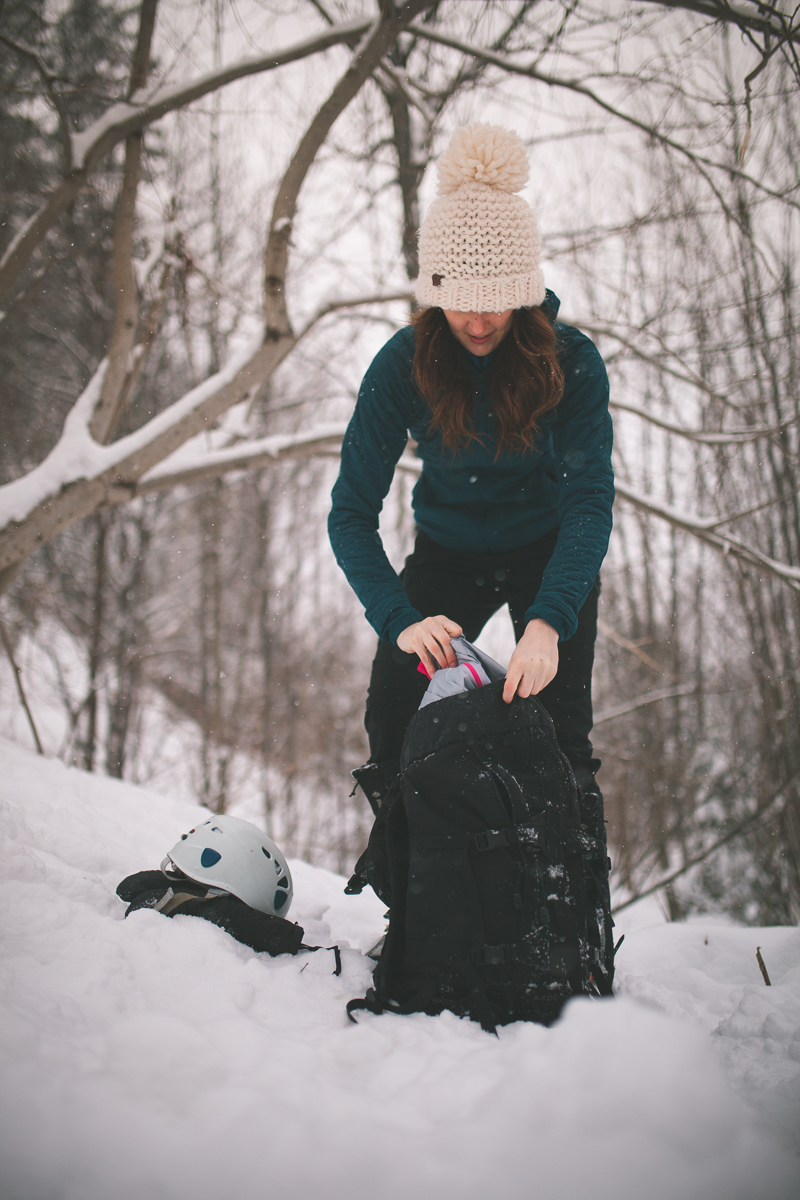
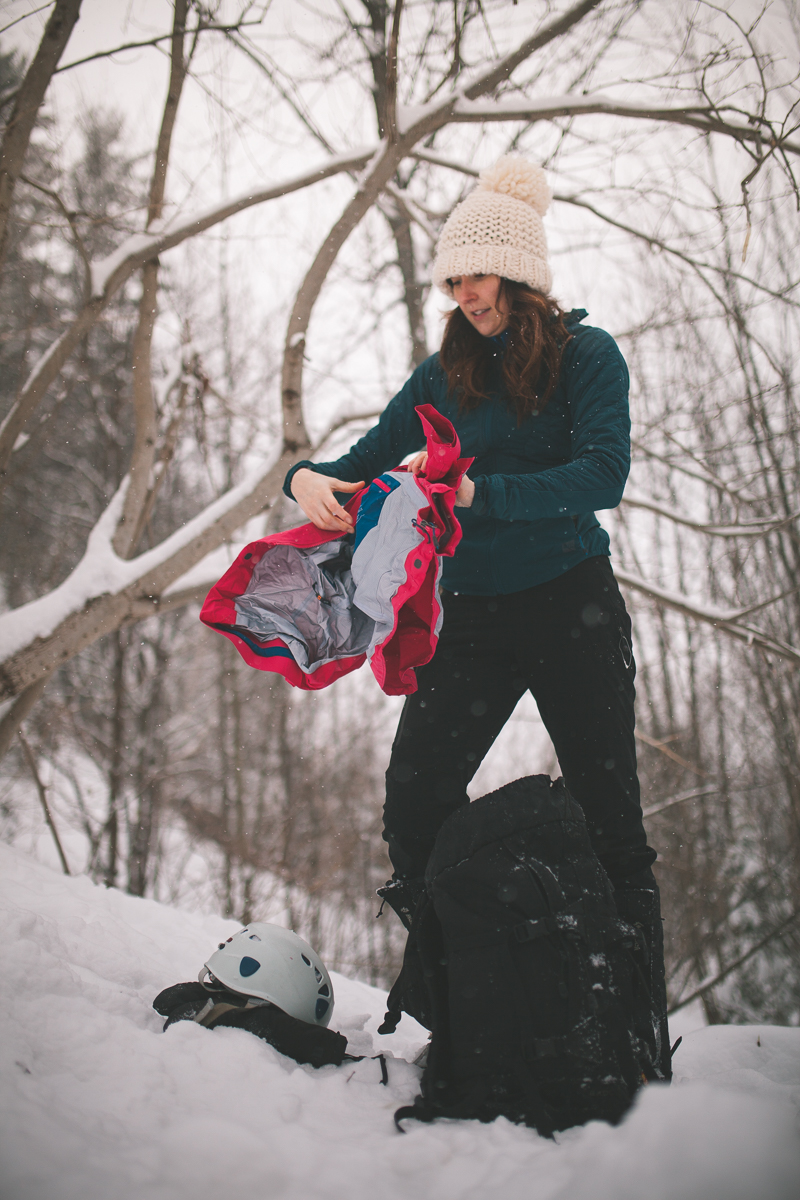
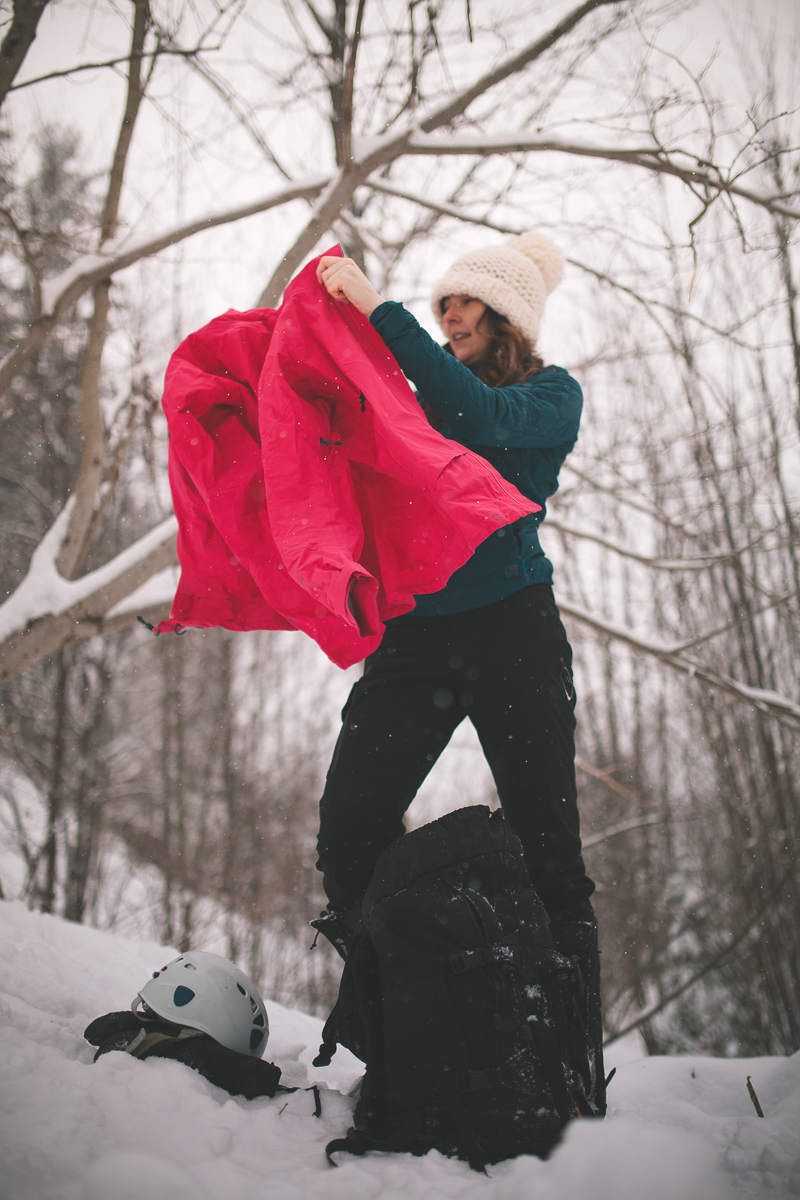
We’ve broken down clothing system to 3 stages: approach, climbing, and belaying. The clothing systems have been outlined for each, with added some notes. Along with that, we’ve also provided some product suggestions from one of our headline sponsors, MEC!

Let us first note that there’s no hard and fast rules to layering, just guidelines. How warm/cold you can get depends on your metabolism, what you ate that day, body-type, fitness level, etc. Being properly hydrated can go a long way though!


1. APPROACH
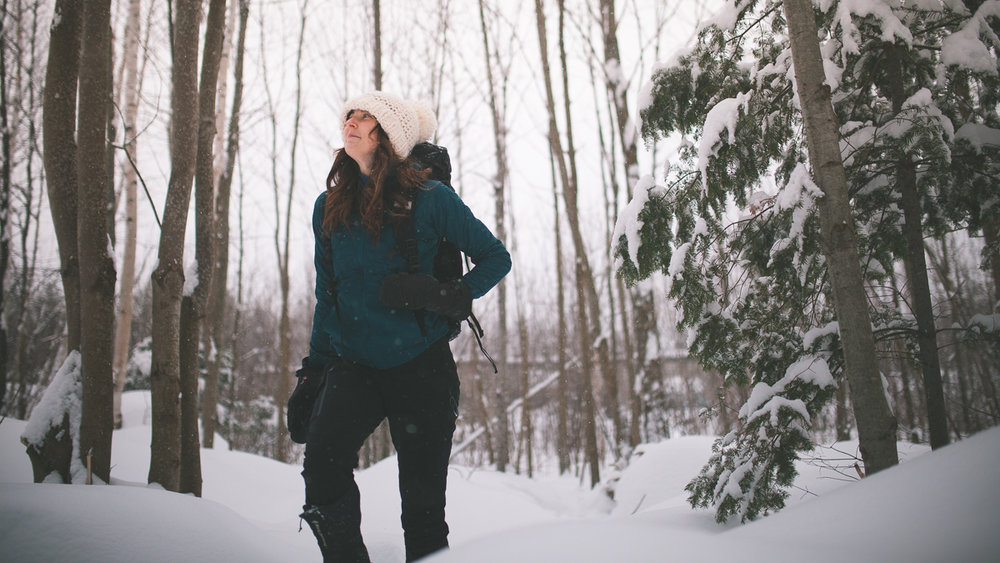
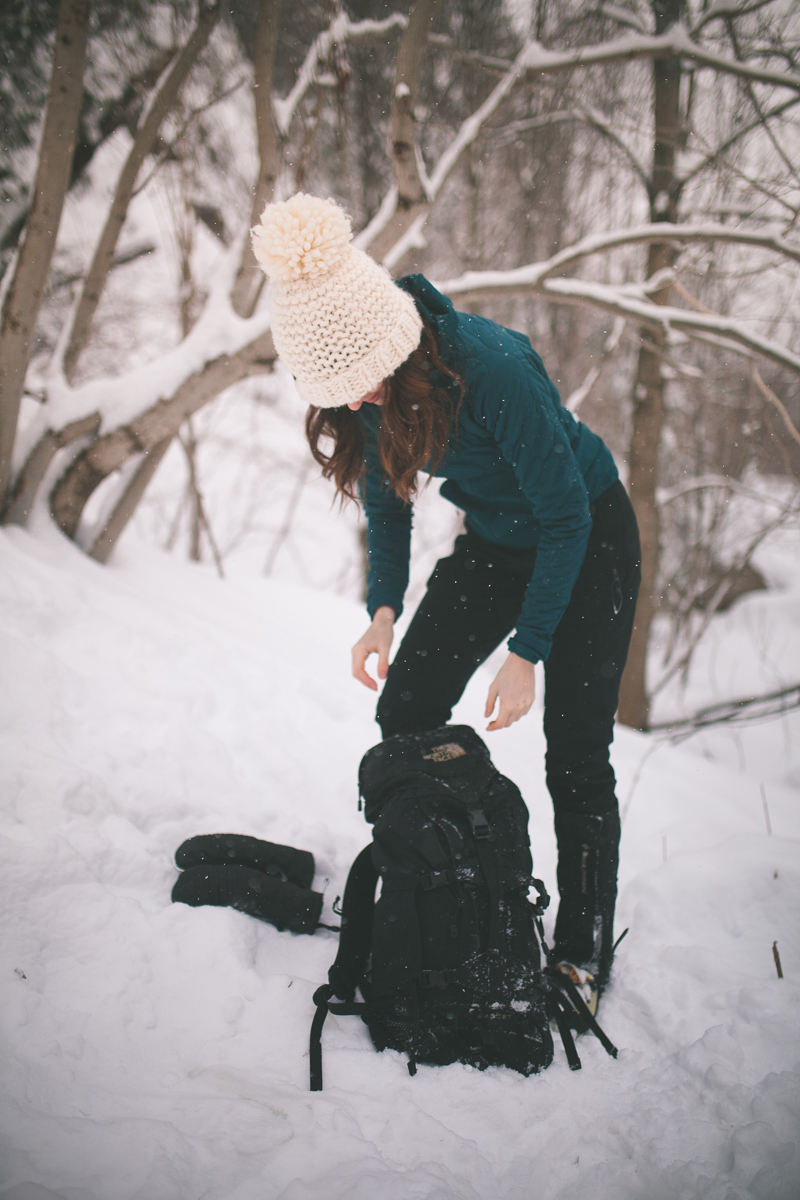
This is where you’ll likely build up the most heat, and where proper laying can arguably the most important part for a fun day at the cliff. If you over-layer, you’ll be a sweaty mess, risking hypothermia when sweat cools down. If you under-layer, you don’t risk as much, but you’ll be jone’sing to work harder on the approach to build up heat.

  • For wooded areas, you can likely ditch the windbreaker, but for open lakes (most of Ontario ice approaches), a windbreaker can be crucial
  • If you just want to sweat it out on the approach, you can also bring a second set of clothing to change into at the cliff
  • Account for terrain and weather conditions. Flat and packed out trails mean you’ll be working less than a steep uphills in waist deep snow
  • Your back will likely be insulated and protected by your pack, so if you have any paneled clothing that has an open back (some winter running jackets), that’ll work great
  • If the approach is short, you can wear your full climbing setup, as you likely won’t build up enough heat to worry about sweating
  • If you’ve decided to wear a shell jacket to cut wind on the approach, most will have pit-zips to dump heat if you need to
  • Doesn’t hurt to keep your puffy jacket on while you wait for anyone to pack their bags at the parking lot – ask for a puffy warning before packing yours away!

BASE – The most important piece on the approach! You’ll want to prioritize moisture transport off your skin – tight fitting synthetics work best in this case.

MEN

Bottom: T2 Long Johns ($39)

Top: T3 Zip Top ($65)

WOMEN

Bottom: T2 Long Johns ($39)

 Top: T3 Zip T ($69)

OUTER – This layer is primarily to keep wind off your back and snow from getting inside. This piece be either heavier or lighter depending on the length of the approach. If you only had to pick one though, we recommend a light weight puffy or softshell.

MEN

Bottom: Highpoint Pants ($165)

Top: Obsession Hoody ($165), Slipstream Hoodie ($99)

WOMEN

Bottom: Ferrata Pants ($119)

Top: Obsession Hoodie ($155), Clarion Hoodie ($89)


2. CLIMBING
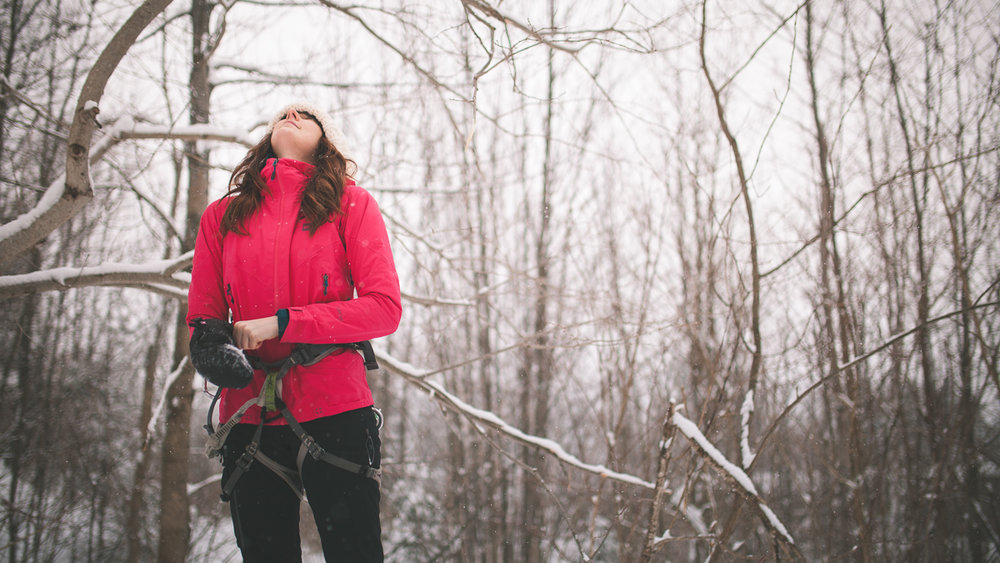
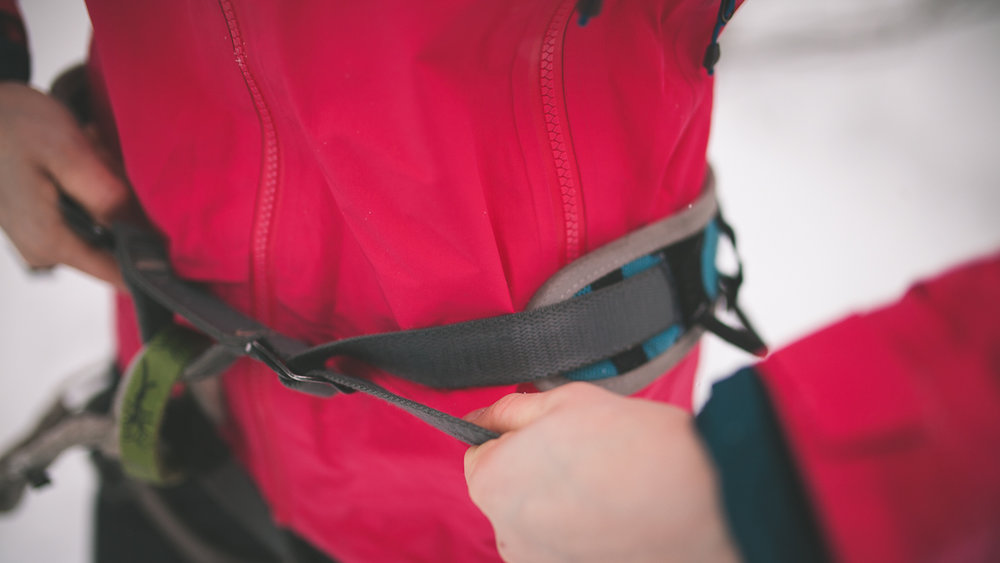
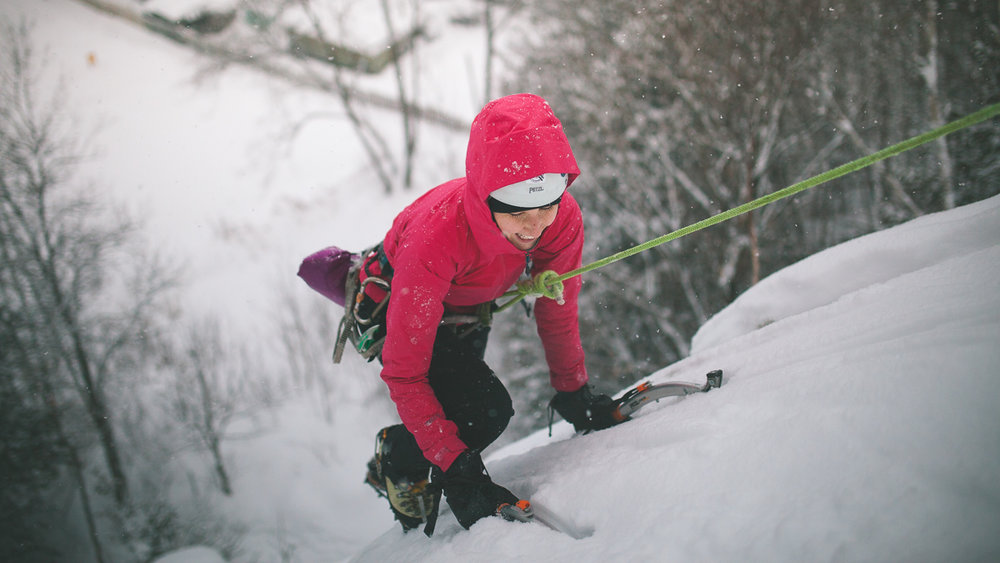
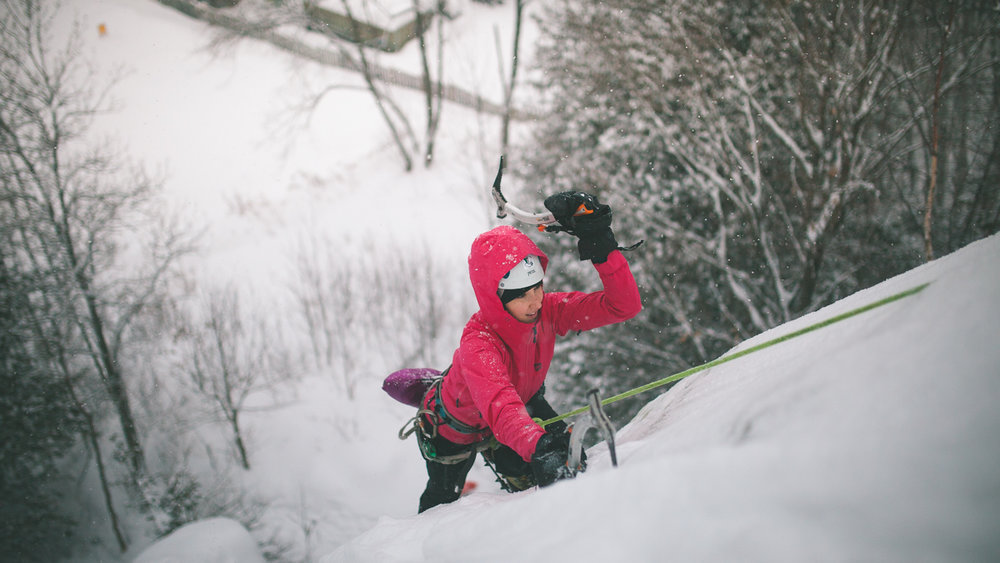
This is where it gets fun and the clothing can have pretty specific features. Generally for ice climbing, you’ll want to make sure that the sleeves don’t rise too much when you lift your arms, mid/outer layer pockets don’t get obstructed when you wear your harness, and the hood is helmet-compatible.

  • Early and late season ice climbs are generally pretty drippy, so having a hard-shell outer layer is a definite luxury
  • Make sure your gloves fit the sleeves of your jacket. It’s sometimes a hassle, as some gloves are meant to go over or under a sleeve, and some sleeves are meant to go over or under gloves.
  • For scruffy mixed climbs where you’ll be rubbing your body against rock, we recommend a softshell outer to handle the abrasion

Base – The same as approach, this is layer’s primary job is to transport moisture from your skin.

Mid – This will be your main insulating piece. You’ll want it to be quite breathable, as the moisture from the baselayer will need low resistance to pass through. You can use as per your “Outer” layer on approach, but we do recommend that this piece not have a membrane when used as a layered insulating piece.

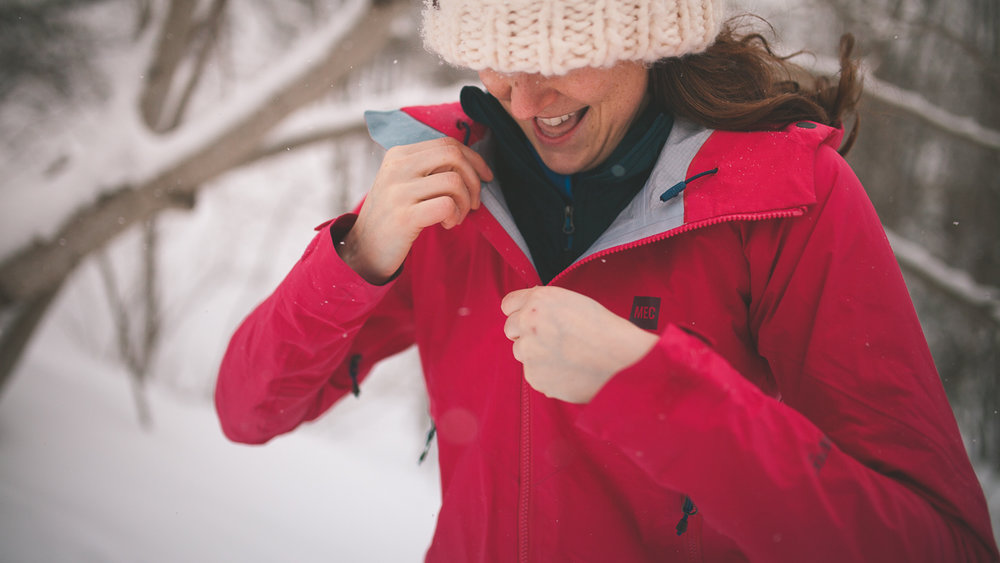
Shell/Outer – Your protection from the elements, and the one you’ll want to be built specifically for climbing (if possible). The primary purpose for this layer is to cut wind, and keep you dry from drippy climbs and precip. You’ll likely want this layer to have a wind/water proof membrane.

MEN

Bottom: Alpine Ally ($170)

Top: Synergy Jacket ($425)

WOMEN

Bottom: Alpine Ally Pants ($170)

Top: Alpine Ally Jacket ($250)


3. BELAY
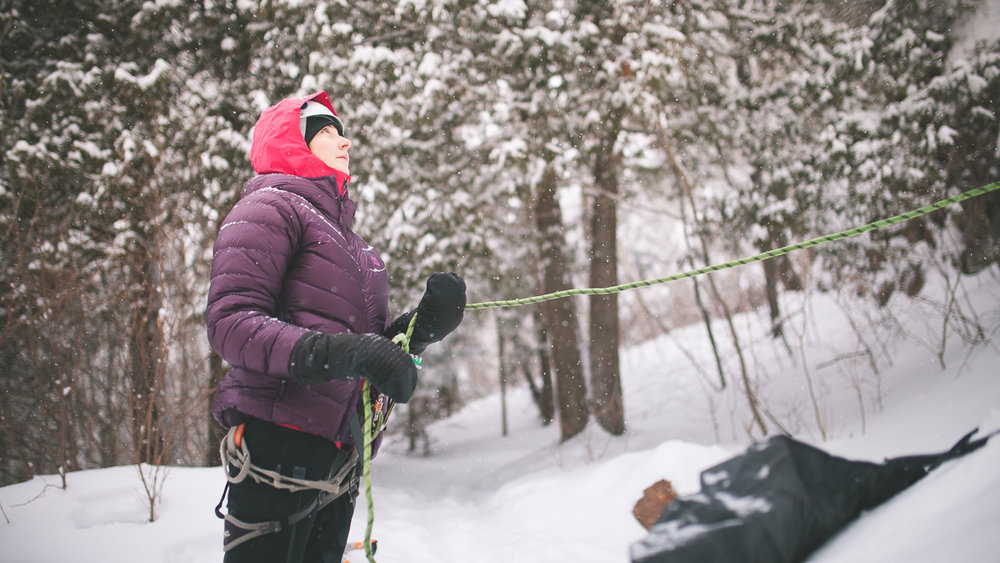
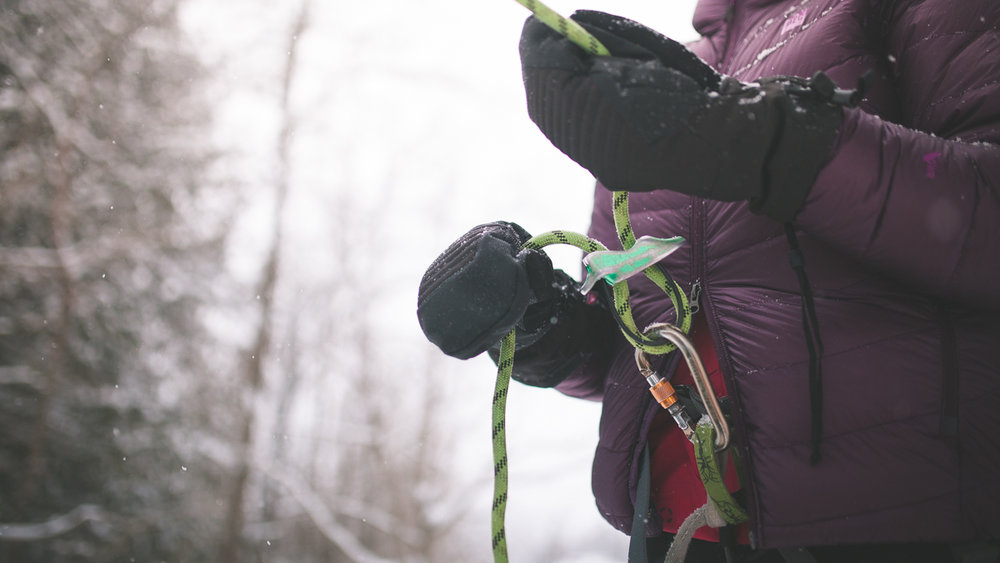
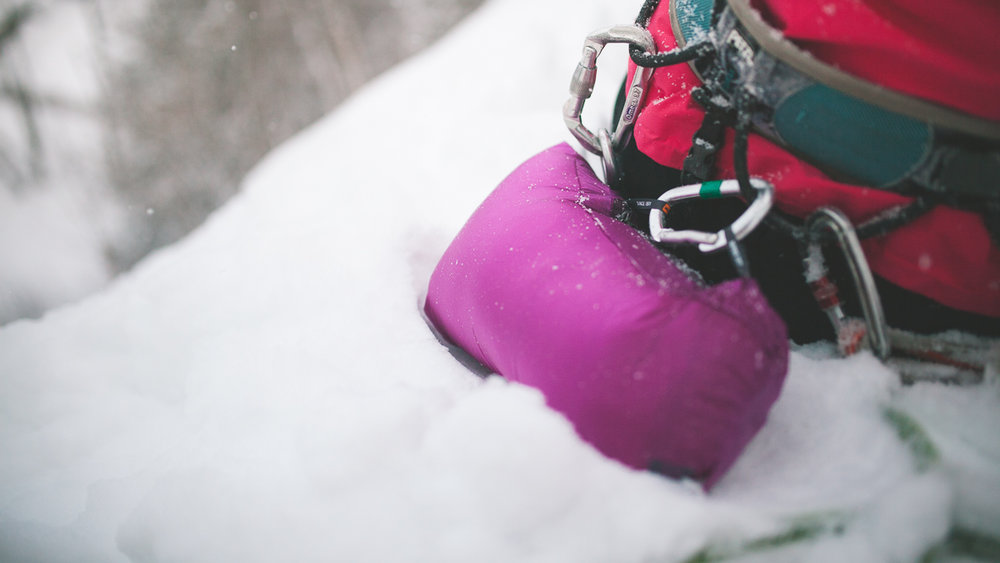
This is the ace in your back pocket, and quite often the most moral boosting piece of gear. You’ll want it to be comfy, and as puffy as possible. This layer is the last piece that should go on, over top of everything else you’re wearing. Some helpful features include: a double zipper that allows you to sneak your belay loop out without riding up the jacket, and a stuff pocket/sack that allows you to put it away during multi-pitch routes.

  •  Big and deep mesh pockets on the inside are great for drying out dedicated climbing gloves while you belay
  • There’s a lot of puffy jackets out there that are better suited as mid-layer pieces or for warmer weather… just pick the biggest one you can for a winter belay jacket, you won’t regret it
  • The technology for synthetics is getting good enough now that it’s matching some down products. Pick either one depending on the climate you’ll be climbing in. General rule of thumb: If you prioritize warmth and weight savings, pick down. If you prioritize cost and low maintenance, pick synthetic.
  • For extra cold days, puffy pants are also an option too!

MEN

Top: Radiator Parka ($250)

WOMEN

Top: Hot Cocoa Parka ($329)


… that’s it – go climb!
We hope that our layering article leads to more enjoyable ice climbing days! See you out at #SOIceFest2!

– your pals at the Southern Ontario Ice Fest & MEC


Photography: Peter Hoang

Model: Alisha Nachma
We need your help! Beaver Valley Climbing Festival 2017 volunteers

By Uncategorized

It’s not too soon to think about summer and outdoor rock climbing! We are looking for your help in making the 2017 Beaver Valley Climbing Festival happen.

Volunteers will receive free stay, food, and admiration from all. We are looking for people to help organize the event as well as day-of volunteers.

Please send us email at info@ontarioaccesscoalition.com to help us bring together the community.

Dinner Tickets

By Uncategorized

Planning on bringing your appetite to the Arlington on Saturday? Make sure to purchase your dinner tickets in advance! Ticket sales close Tuesday, February 14th @5pm to give enough time for SunRun Café to prepare enough wonderful dinners for all our hungry bellies!

Circulating rumours are true – the first 100 dinner ticket sales will come away with an awesome surprise. You’ll be the envy of all who missed out!

Thanks to the Ontario climbing community: plan amendments win

By Uncategorized

Late last year, we asked climbers to write to the Niagara Escarpment Commission about potential changes to the Niagara Escarpment Plan which would severely restrict climbing access. Thanks for all your support during the recent Niagara Escarpment Plan consultation. We believe that it made a difference in the final Staff Recommendations, which came out in December. Here’s an update about the Plan amendment process.

This January, the OAC confirmed that the Proposed Plan includes amendments clarifying that climbing may continue in areas where there is a history of climbing. It should be noted that climbing may continue. It is thus vitally important that climbers, like all user groups, continue to act responsibly.

Climbing will continue to be allowed in a Nature Reserve where it is an existing use, and is generally allowed outside of Nature Reserves, subject to management plans.

This represents a significant win for the climbing community and stands as an example of what we can accomplish when we come together as a community. While this recommendation is less than we asked for, it is something that we can live with. We at the OAC currently believe that this will not affect climbing at some of our highest-profile areas like Lion’s Head. We will continue to advocate for climbing access throughout Ontario. The OAC will be calling on the climbing community shortly in an effort to address long-held climbing closures in Provincial Parks.

The staff report specifically mention your advocacy:

“Numerous comments received from individuals and rock climbing organizations concerned that proposed policies will restrict opportunities for rock climbing which is a tourism opportunity. They state that there is no indication that the activity causes environmental harm. They propose that rock climbing be allowed to continue where a history of climbing activity has taken place and support preparation of climbing management plans.”

It lists the consideration:

“Where rock climbing can be identified as an existing use as defined in the [Niagara Escarpment Plan], it may be allowed to continue in NEPOSS.”

You can find the recommendations on page 43 of the following PDF document:
http://escarpment.org/_files/file.php?fileid=fileednIjxTVCQ&filename=file_2016_12_14_15_Co_ordinated_Review_Policy_Analysis___Policy_Areas_Complete_RedactedTC.pdf

Get involved, stay informed, and climb safe.

(photo credit: Mike Penney)

Next steps for climbing access in Ontario

By Uncategorized

This past October, the OAC launched a campaign to address proposed closures to Ontario climbing in the new Niagara Escarpment Plan. It is unclear when we will learn the outcome of our community’s efforts. It is vitally important that we as a climbing community continue to pressure relevant management bodies to recognize rock climbing as a legitimate conforming activity.

lh_at_risk

Rock climbing in Canada is growing at an incredible rate. The current ban on rock climbing in Ontario Provincial Parks (with the exception of Bon Echo) is placing increased pressure on existing areas. Additional closures to public lands on the Bruce Peninsula and Devil’s Glen will further increase impact at remaining climbing sites. While every other province in Canada with significant climbing opportunities works with their local climbing community, Ontario instead proposes blanket closures, a unique approach.

In January 2017 the OAC will be issuing a CALL TO ACTION. Details will be provided at that time. It is vital that every climber get involved regardless of ability, style of climbing, or experience. We as a community must continue to push for our right to enjoy climbing on public lands.

Ancient Cedars and New Perspectives

By Uncategorized
Turtle Island book cover

Heart of Turtle Island: The Great Escarpment

I have long said that climbers are lucky to be able to visit the cliffside environment. And never is this more evident than when a non-climber gets to see what we see. The expression of joy on their faces helps remind me that our climbing areas are truly special. Recently, I was contacted through the OAC and Conservation Halton to help a world-renowned photographer access the cliffside at Mount Nemo. Mark Zelinksi is currently working on a book about the Niagara Escarpment and wanted some photographs of ancient cedars to complete the project.

Throughout the day, as we searched for and photographed ancient cedars, we crossed paths with numerous hikers at Mount Nemo. They were enjoying a stroll through the forest on a beautiful autumn day. Occasionally they would stop at the many lookout points along the top of the cliff and take in the vista-of-humanity in the valley below—farms, golf courses, and cities—unaware of the ancient world below their feet. An ancient world that Mark hopes to capture and showcase for everybody to see. His work aims to preserve this ancient world in images and words.

I’ve been philosophically wrestling with human impact these days. The conservation versus enjoyment trade-off hangs heavy in my mind. What is that balance between preservation and being able to experience what we are preserving? Is it even meant for us to experience, to enjoy? Does the old environmentalist adage of “leave no trace, take only photographs” still fit with the current, and growing, usage of our parks and natural spaces? We can’t pretend that we have no impact when using these trails. While these trails are created to preserve the environment, they are still highways for humanity into previously natural areas; every footstep a micro-construction site of steamroller compaction and bulldozer erosion. In a world where everyone has a device capable of professional-quality photographs, does a picture of an ancient cedar inspire us to preserve the space, or does it inspire us to go take a selfie with the tree?

Climbers have long been the scapegoat of Escarpment conservation. As we are the only user group on the side of the cliff, we are an easy target. That cliffside ecosystem is ancient–one of the few undisturbed ancient worlds left on Earth. Climbers need to recognize that it isn’t a playground or a climbing gym. We need to educate ourselves on what is being protected, and to try to co-exist with it. It seems the more time we spend in the cliffside environment, the more we are desensitized to its uniqueness and beauty. Mark’s excitement over seeing the amazingly sculpted ancient trees reminded me how lucky we are as climbers to experience this cliffside environment. But it isn’t just the ancient trees, it’s the whole ecosystem that the cliffside supports, itself supported by the trees.

Next time you’re out climbing, open your eyes to the world around you and ask questions. “What’s this plant?” “What’s that tree?” “What type of bird is singing that song?” In doing so, we can deepen our relationship with the natural world. And a deeper relationship will help us remember how special our time is when spent in this space.

Mark’s book, Heart Of Turtle Island: The Great Escarpment, is expected to be released in October 2017. It should be required reading for Escarpment climbers, as the words and images contained within will guide us to deepen our appreciation for our local crags.

http://www.markzelinski.com/books.html

Written by Justin Dwyer